How Employability Analysis Supports Pre-Litigation and Litigation Strategy
Before a claim is resolved or a case reaches trial, decision-makers are often faced with critical vocational questions. Can the individual return to work? Are alternative occupations realistically available? How do reported restrictions affect earning capacity? The answers can significantly influence exposure, claim evaluation, settlement discussions, and overall case strategy.
These questions may arise before litigation begins, making early vocational insight valuable during claim investigation, exposure analysis, settlement evaluation, and return-to-work planning.
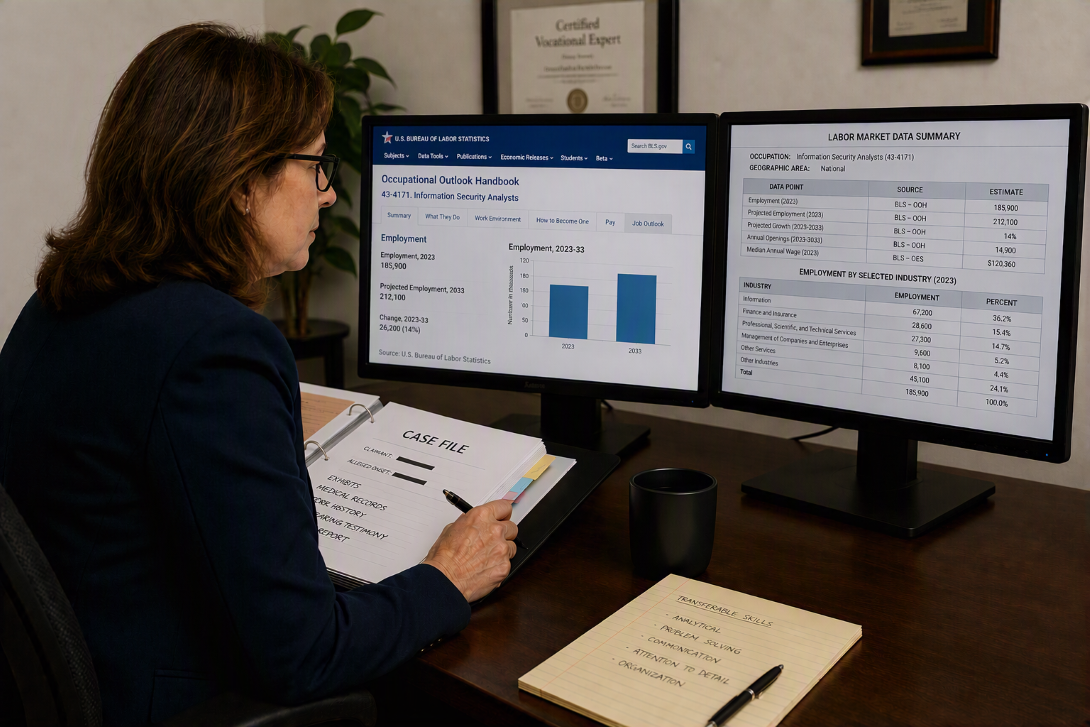
An Employability Analysis helps answer these questions through objective vocational evaluation of an individual’s work capacity, transferable skills, labor market access, and earning capacity. At The Verity Group, we help clients move beyond assumptions by providing vocational insight grounded in established methodology and real-world labor market data.
The following questions frequently arise during claim evaluation, settlement discussions, and litigation planning.
Can the Individual Realistically Return to Work?
One of the first questions raised after a significant injury or illness is whether the individual can realistically return to their prior occupation.
The answer is not always found in a medical record alone. An Employability Analysis evaluates how reported restrictions interact with the individual’s education, skills, work history, and labor market opportunities to determine whether competitive employment remains feasible.
If They Cannot Return to Their Previous Occupation, What Are Their Realistic Alternatives?
Many individuals possess transferable skills that may allow them to transition into alternative occupations.
An Employability Analysis identifies occupations that may be compatible with the individual’s background and functional abilities while considering factors such as retraining requirements, accommodations, vocational barriers, and labor market realities.
This often helps parties move from theoretical job possibilities to realistic vocational options.
How Do Medical Restrictions Affect Employability?
Many files contain differing medical opinions, changing restrictions, or conflicting assessments of work capacity. Understanding how those differences affect employability can be critical to evaluating exposure and settlement value.
Rather than determining which medical opinion is correct, vocational analysis evaluates the vocational impact of those restrictions and helps demonstrate how varying medical scenarios may produce different employment outcomes.
This can provide valuable context during settlement negotiations and claim evaluation.
How Has the Injury Affected Earning Capacity?
The question is often not whether an individual can work, but whether they can return to comparable earnings. Determining residual employability and earning capacity often provides valuable information during claim evaluation and settlement discussions.
An Employability Analysis evaluates:
- Potential occupational options
- Expected wage ranges
- Labor market access
- Changes in earning capacity compared to pre-incident employment
This information can help quantify vocational loss and better inform damages evaluations.
Are Appropriate Employment Opportunities Actually Available?
Even if an occupation appears compatible on paper, it may not be reasonably accessible within the individual’s labor market.
Vocational analysis considers employment opportunities, labor market conditions, and practical barriers to employment to determine whether suitable work is realistically attainable.
Is Additional Vocational Information Needed Before Settlement Discussions?
Cases involving permanent restrictions, disputed work capacity, extended lost time, or significant wage-loss exposure often benefit from additional vocational information before mediation or settlement negotiations.
An Employability Analysis can help:
- Clarify return-to-work potential
- Evaluate alternative occupations
- Assess earning capacity
- Reduce uncertainty
- Support informed settlement decisions
These objective vocational findings often provide a stronger foundation for case valuation than assumptions alone.
How The Verity Group Helps
At The Verity Group, we provide Employability Analysis services that help attorneys, claims professionals, employers, and risk managers evaluate vocational issues that may affect exposure, damages, settlement value, and return-to-work planning.
Whether the issue involves disputed restrictions, return-to-work potential, earning capacity, or labor market access, our team provides objective vocational insight that supports informed decision-making and case strategy. The service may include records review, vocational interview, testing, labor market research, and a written employability opinion, depending on the needs of the matter.
When Vocational Questions Impact Case Strategy
Employability questions are rarely as simple as “Can they work?” More often, the critical questions involve whether they can compete in the labor market, what occupations remain available, and how any loss of earning capacity may affect case value.
If your matter involves disputed work capacity, wage-loss exposure, return-to-work concerns, or questions regarding alternative employment, The Verity Group’s vocational experts can help determine whether an Employability Analysis or another vocational service is appropriate for your case. Contact our team to discuss the vocational questions affecting your case strategy.