
As personal injury litigation continues to evolve, attorneys and claims professionals face increasing pressure to present damages that are not only compelling, but defensible. Record-setting verdicts, heightened scrutiny of expert testimony, and data-driven case valuation have elevated expectations for how future medical needs and occupational losses are assessed.
Life care planners and forensic vocational experts each play a critical role in meeting these demands. While their analyses address different aspects of damages, both disciplines rely on objective methodologies, standardized practices, and evidenced-based conclusions to bring clarity to complex injury claims.
Life care planning provides a structured framework for evaluating future medical, therapeutic, and supportive care needs following an injury. Through comprehensive record review and transparent cost projections as well as physician collaboration when necessary, life care planners establish a defensible foundation for future care damages that can withstand negotiation, deposition, and courtroom scrutiny.
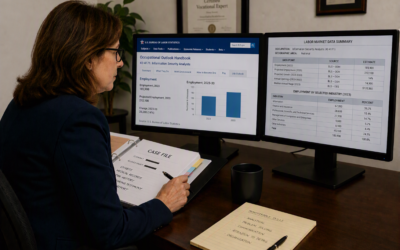
Forensic vocational evaluation, by contrast, focuses on the impact of injury on work capacity, employability, and earning capacity. Using structured interviews, transferable skills analysis, and labor market research, vocational evaluators assess how physical, cognitive, or psychological limitations affect an individual’s ability to work and earn income.
Importantly, these services are distinct and independent. Depending on the facts of the case, attorneys and claims professionals may retain a life care planner, a vocational evaluator, or both. Each service stands on its own professional scope and methodology, and each can provide critical insight into different components of damages.
As litigation grows more complex and expectations for expert analysis continue to rise, credible, well supported evaluations remain central to informed case valuation and resolution. Objective life care planning and forensic vocational evaluation help ensure that damages are clearly defined, appropriately supported, and aligned with the realities of today’s litigation environment.